Fedora Flock Prague 2026 report
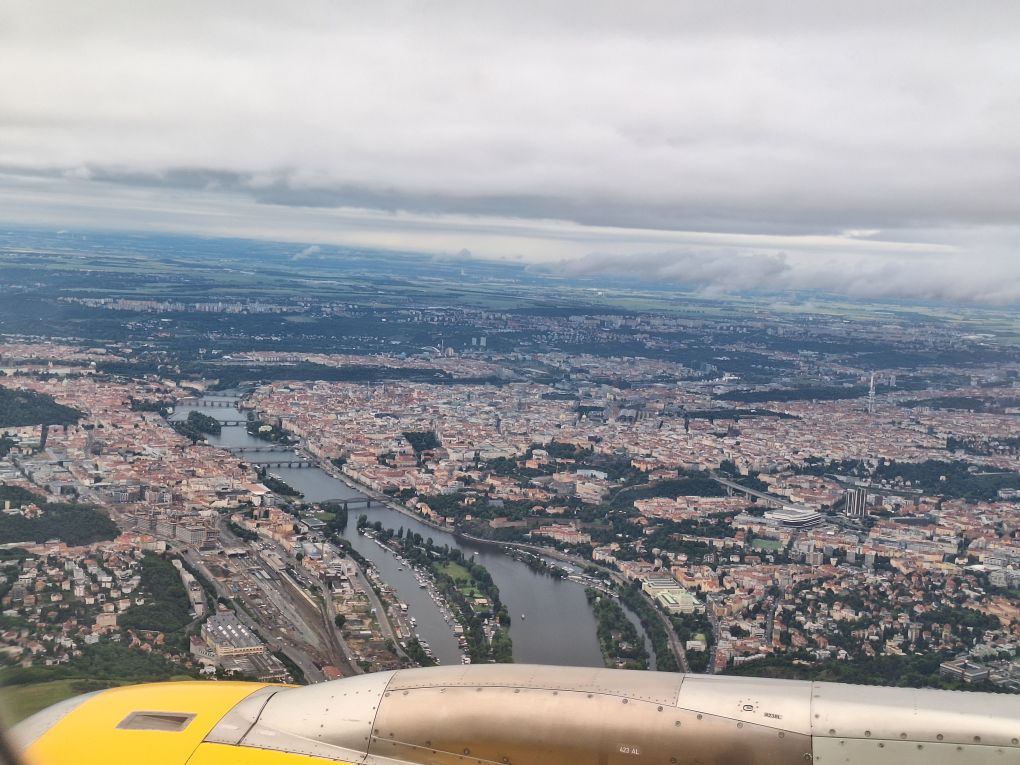
This year I spent 5 nights and 4 days on Flock in Prague. Arrived on Friday evening and joining the F2F meetings all Saturday, where we discussed some trending projects in more detail.
The conference officially started on Sunday with workshops. I attended The Future of Fedora Atomic: Unifying on Bootc and Shared Infrastructure presented by Clement and Hristo, about the architectural shift from rpm-ostree to bootc container-native images, where each variant is defined as a Containerfile and OS update mechanism pulls OCI images rather than ostree commits.
Next workshop I attended was Akash and Tomas presenting where do we stand in the Forge team and an overview of what we managed to do since the last Flock: Forging Fedora Project’s Future With Forgejo. Akash provided the Forge update, talking about ongoing migrations, Forge Actions, the status of the private issues and the challenges we face. He announced Pagure sunset, which will happen by the end of July and will mean shifting Pagure into static read-only site and after some time will decommission completely. He talked about the policy Forge will have for projects that stayed hosted on pagure past the decommission as some people in the audience expressed their concerns.
Tomas took over and drafted the future dist-git and it’s features - some identical to the old pagure instance (for example the lookaside cache), some revised and some new, for example PR-level status API, granular permissions or repo-scoped access tokens. He was talking about how the transition to forge-src is planned to happen and of course, the future plans for distgit pagure instance decommissioning.
In the evening we had an opportunity to meet as a CLE team at a team dinner, and some folks then continued to International Candy Swap, which I did not attend this year.
The next day the streamed part of the Flock happened, starting with opening notes from Justin and a keynote by Jef about the State of Fedora. One of the main topics discussed was the generational exchange of the Fedora contributors and how to follow the natural flow of things and leverage it for bringing new contributors into our community. The keynote smoothly transitioned into the Fedora Council Strategic Meeting, where the presenters further elaborated on the problem of slowly decreasing contributor numbers in the community, with some very nice points made by Aleksandra and Miro. Next was the Fesco Q&A, which a attended only partly as I was pulled into the hallway track during the coffee break.
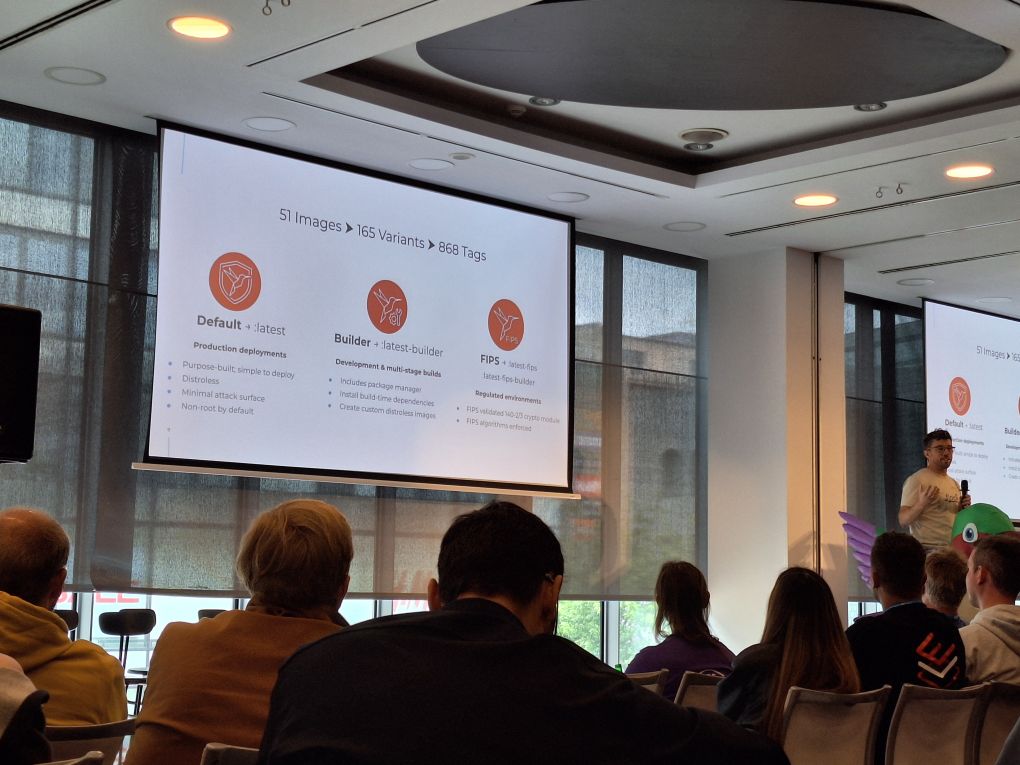
Next I attended Stef’s Hummingbird talk, which is an initiative to produce container base images, that are minimal, low or zero CVE and close to upstream. This would actually solve the problem we have with the Forge runner container images and I used the lunch break to ask Valentin directly about some aspects of it. I had some amount of folks interested in Forge Runners asking whether we would provide a fedora-based default runner image for the Forge Runners, as the default from the forgejo upstream is to use the node:22-bookworm. Ideally already with node. We experimented with this option, alas, the images on the Fedora namespace in quay are usually s2i, made to be used by applications and unfit or difficult to use for the runner jobs. We could create our own image and host it on quay, the problem is the maintenance burden it would create on the team or later for infra team.
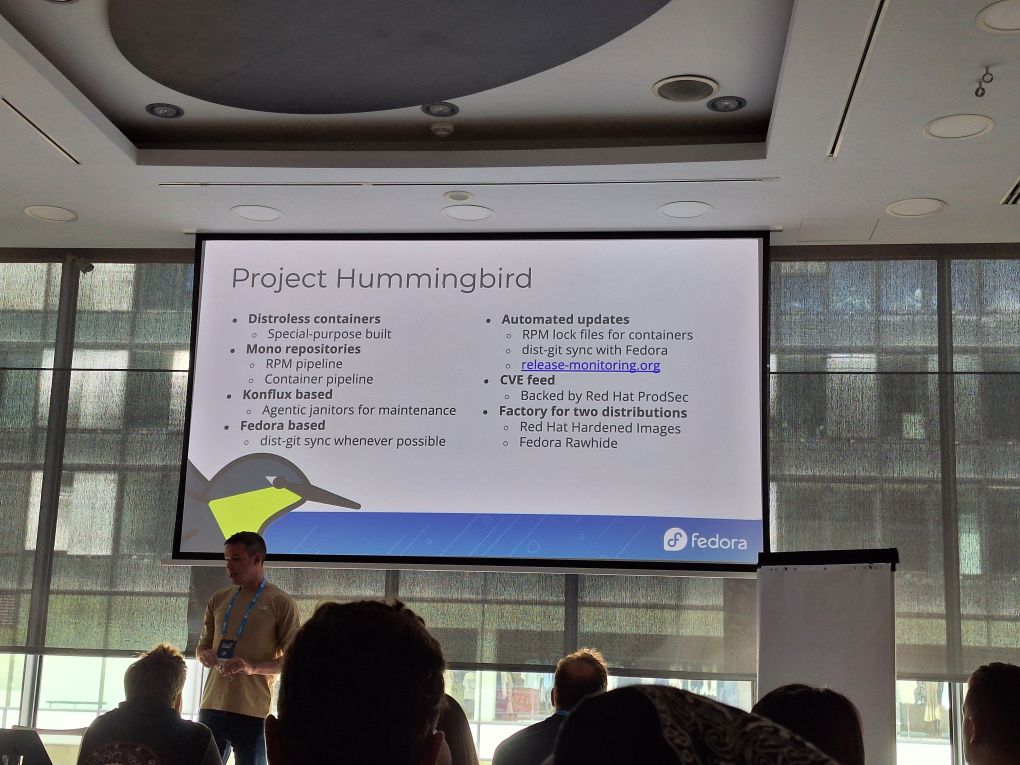
Hummingbird could potentially help us with that. We could profit from fedora-based image with low CVE counts, while not owning the base image lifecycle. Still Hummingbird is at least now focused on minimal images, and preinstalled node will probably not be in scope, but, this could be solved by installing node inside the Action file.
After lunch it was time for my talk: Forgejo Runners on Fedora Forge, where I presented the community with an overview of runners we offer on the Fedora Forge, the regular ones and testing-farm optimized and current limitations and constraints users should be aware of. I walked the audience through the process of requesting a runner with an issue template and talked about where and how we run the runners and what our resources are. In the end I talked about the workflow automation capabilities, describing what happens under the hood when we add or remove a runner.
I got a couple of interesting questions, one of them was aimed at whether we will provide fedora-based default runner image of course :) and another one I remember was whether we spin a new VM for every runner job. We don’t and for the foreseeable future don’t plan to, simply because it would make the Actions significantly slower and resource costly. We don’t provide privileged runners anyways (we did and still do some experiments with privileged runners, but we will not offer those regularly on Fedora Forge), so the extra security layer would not have that much of a justification. We could, though, explore some middle ground in the future, with microVMs perhaps.
After the talk I met with some folks from the community and discussed further the topic of runners and what the community finds nice-to-have.
The last day of Flock I started with the two language-oriented talks: How Fedora translators community raised the level and Languages in Floss - What’s the Linux OS status with some interesting insights into how French is doing in the open source.
Next talk was Kevin’s and he was talking about scrapers, their classification due to their behaviour and what can be done to identify and target the hostile ones, which was followed by discussion with the audience.
Just before lunch I peeked to Emma’s Why You Should Use Open Source Design in Open Source.
After the lunch I went to take care of the registration desk as a volunteer, which turned out to be a nice afternoon chatting with friendly folks of the community and playing a bit of a board games and by the end my volunteering slot it was the end of Flock and Justin’s closing remarks with announcement of the mentor awards.
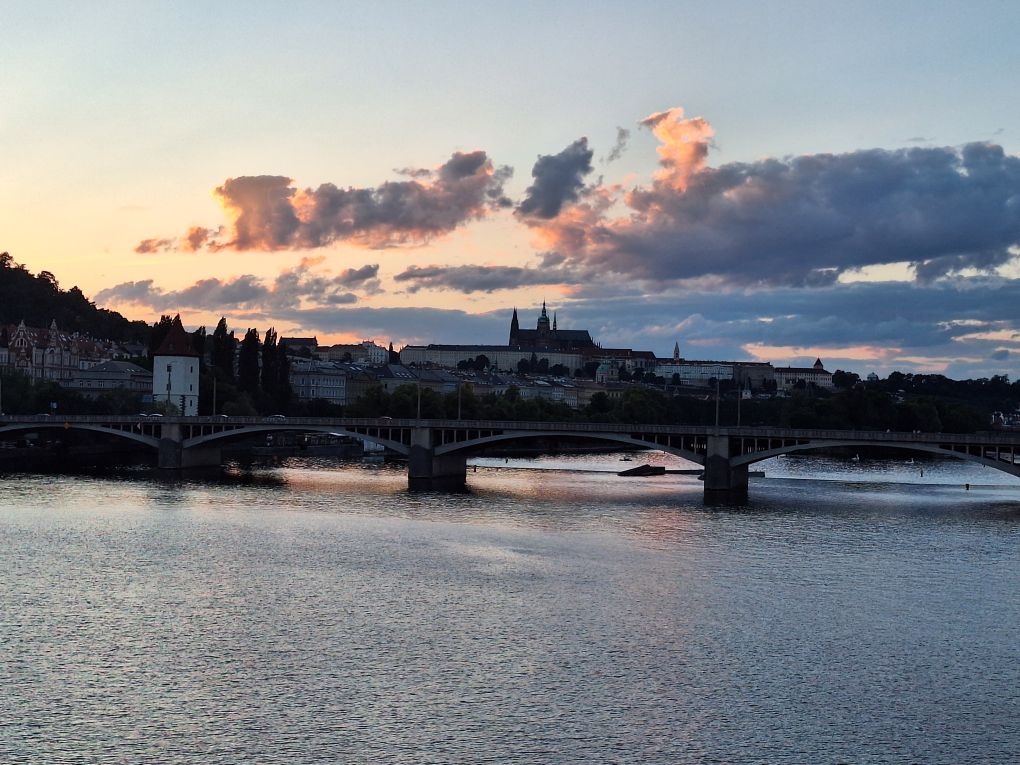
It was my 4th Flock, second time in Prague on the same venue, so friendly old known environment. It was very nice to meet my colleagues from the team and folks from the community and I’m looking forward to the next one!